
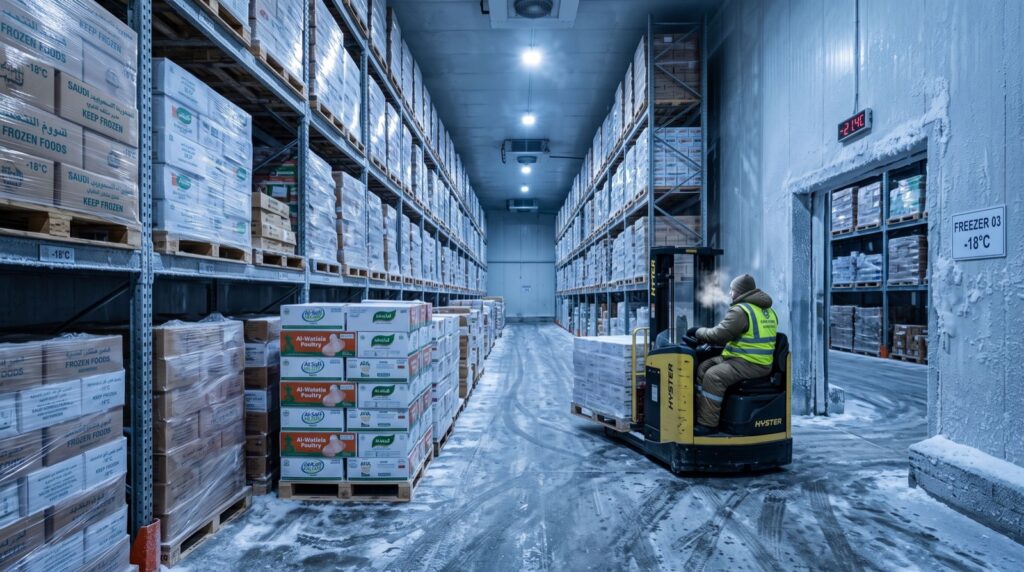
Every container that clears King Abdulaziz Port needs somewhere sensible to go next, and for thousands of online sellers that decision now shapes their entire cost structure. Dry storage in Dammam has turned into the quiet workhorse of Saudi e-commerce: an air-conditioned buffer between the ship and the shopper where electronics, homeware, packaged snacks, and spare parts wait out the gap between import and order. Get this link right and delivery promises become easy to keep. Get it wrong and you pay for it in damaged cartons and missed dispatch windows.
This article walks through why the Eastern Province matters so much for inbound goods in 2026, the real difference between dry and ambient conditions, and how growing brands pair Dammam with Jeddah to cover the whole Kingdom in two-day reach or better.
The Eastern Province Advantage for Imported Goods
Dammam sits at the receiving end of one of the Gulf’s busiest container corridors, with direct feeder routes from Asian manufacturing hubs and road links to Bahrain, Kuwait, and the wider GCC. Positioning stock here means an imported pallet can be received, checked, and shelved within hours of customs release instead of riding a truck across the country first.
The national context makes this even more attractive. Saudi Arabia’s logistics ambitions under Vision 2030 include turning the Kingdom into a global logistics hub connecting three continents, and the investment in ports, bonded zones, and highway capacity is visible on the ground in 2026. Warehouses near the port benefit directly from that infrastructure spend.
Three practical wins follow from an Eastern Province base:
- Lower drayage costs, because the facility sits minutes from the terminal rather than hours away
- Faster stock availability, since receiving happens the same day the container is released
- Regional optionality, with GCC land borders close enough for cross-border fulfilment tests
How Does Dry Storage in Dammam Keep E-Commerce Margins Healthy?
Humidity is the silent tax of Gulf coastal cities. Cardboard absorbs moisture, adhesives weaken, electronics packaging warps, and a pallet that looked perfect at origin arrives at the customer looking tired. Professional Dry Storage In Dammam solves this with controlled humidity, sealed docks, and racking that keeps every carton off the floor and out of trouble.
Fewer write-offs, better reviews
Sellers who move from a rented shop-lot to a controlled facility routinely report a visible drop in damage claims within the first quarter. Presentation matters online; a crisp box photographed in an unboxing video is marketing you did not have to pay for.
Space that flexes with your sales calendar
White Friday, Ramadan, and back-to-school season can triple an online store’s inventory needs for a few weeks. Pallet-based pricing lets you expand for the peak and shrink afterwards, which a fixed lease can never do.
Ambient, Dry, Chilled: Which Conditions Does Your Catalogue Need?
Sellers often use “ambient” and “dry” interchangeably, then discover their contract covers something different from what their products require. The comparison below clears up the distinction as facilities in Saudi Arabia typically define it.
| Condition | What is controlled | Best suited for | Risk if you choose wrong |
|---|---|---|---|
| Dry storage | Humidity plus temperature ceiling | Electronics, paper goods, powders, packaged food | Moisture damage in coastal climates |
| Ambient storage | Stable room temperature band | Homeware, tools, canned items, apparel accessories | Heat degradation in unconditioned sheds |
| Chilled storage | 0°C to 5°C range | Fresh food, certain cosmetics, pharma-adjacent goods | Spoilage and regulatory exposure |
Most e-commerce catalogues split roughly along these lines, and mature operators can hold all three conditions under one contract so you are never juggling multiple vendors for one order.
Building a Two-Hub Network: Dammam East, Jeddah West
Once monthly order volume crosses a few thousand shipments, single-warehouse economics start to strain. Trucking every western-region order from the Gulf coast adds a day of transit and real cost per parcel. The standard fix is a second node on the Red Sea side, and Ambient Storage in Jeddah gives sellers exactly that: a temperature-stable base serving Jeddah, Makkah, Madinah, and the fast-growing western suburbs.
A two-hub split typically follows the population map. Riyadh demand can be served from either side depending on carrier rates, while coastal orders ship from the nearest hub. Brands running this model in 2026 report next-day coverage for the large majority of Saudi addresses without paying air-freight premiums.
Selecting the operator matters as much as selecting the city. Treat it like hiring: interview several candidates, check references, and work only with trusted professionals who can show you live temperature dashboards rather than promises on a brochure.
A Launch Checklist for Your First Outsourced Warehouse
Moving inventory into a third-party facility goes smoothly when you sequence it properly. Follow this order:
- Classify every SKU by required condition: dry, ambient, or chilled.
- Forecast pallet positions for your next two sales peaks, not just today’s stock.
- Request the facility’s insurance coverage, fire systems summary, and access procedures.
- Run a pilot with 20 to 30 percent of inventory and measure receiving accuracy for one month.
- Integrate stock reports with your storefront so listings reflect true availability.
- Scale the remaining volume once error rates stay below your threshold.
Frequently Asked Questions
What does dry storage in Dammam typically cost?
Pricing is usually quoted per pallet position per month, with handling charged per inbound and outbound movement. Rates vary with volume commitments, so ask for tiered pricing once you pass fifty pallets.
How fast can stock reach Riyadh from a Dammam warehouse?
Line-haul along the Dammam-Riyadh corridor generally runs four to five hours, which supports next-day delivery for most capital-city orders when cutoffs are managed well.
Do I need my own import licence to use a third-party facility?
Your goods still clear customs under your commercial registration or your importer of record. The warehouse takes over after release; confirm who handles port collection in your quote.
Can one provider handle both my Dammam and Jeddah inventory?
Yes, and it is usually the better path. A single operator across both cities gives you one contract, one reporting format, and simpler stock transfers between coasts.
Conclusion
Saudi e-commerce keeps compounding, and the winners are the sellers whose inventory sits closest to the customer in the right conditions. Anchoring your inbound flow with dry storage in Dammam, then extending west when volume justifies it, is the most capital-light route to Kingdom-wide reach in 2026. Price out your pallet needs, book a site visit, and put your stock where the growth is.